
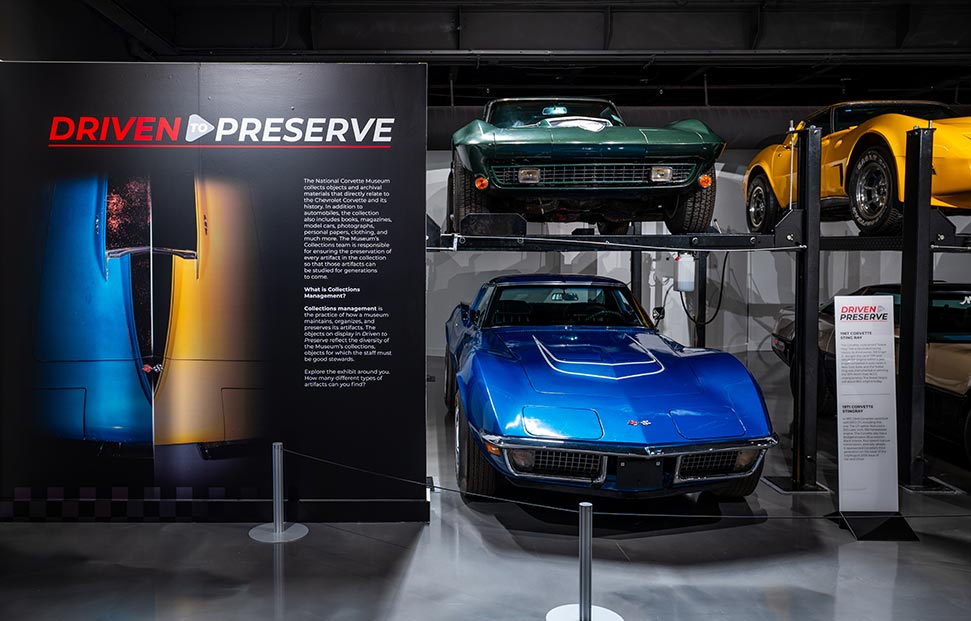
Caring for more than 120 rare Corvettes and 50,000 artifacts at the National Corvette Museum isn’t a job for the faint of heart. Every polished fender, every archival document, every engineering prototype carries a piece of America’s Sports Car history—and now, the Museum is pulling back the curtain on what it takes to preserve it all.
The National Corvette Museum in Bowling Green has unveiled Driven to Preserve, a new exhibition that brings visitors behind the scenes of collection care. Instead of simply admiring the cars on display, guests step directly into the routines, decisions, and meticulous processes that keep the Museum’s world class collection ready to teach, inspire, and endure.
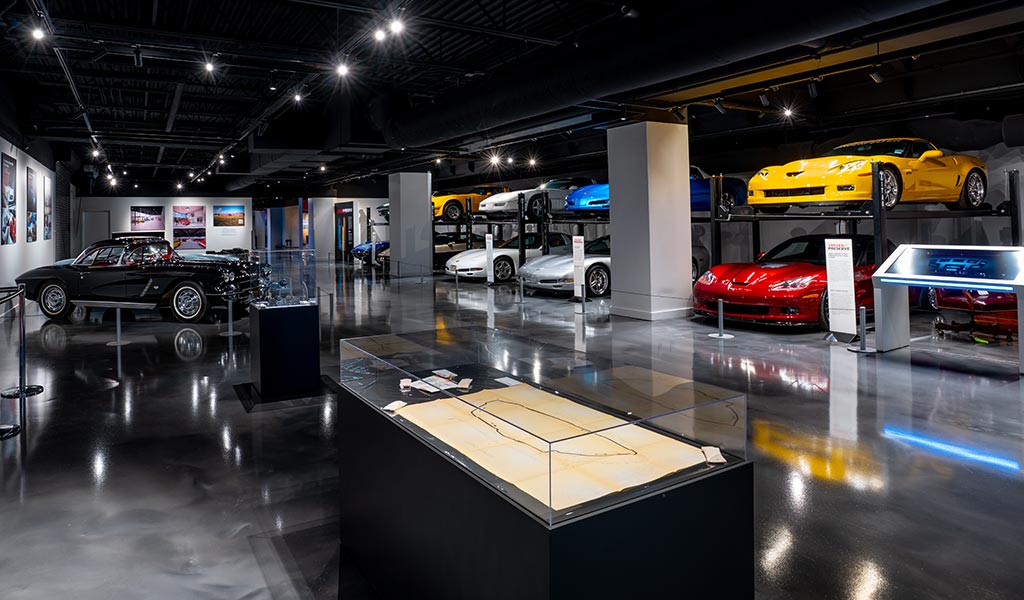
From cataloging and documentation to environmental monitoring and long term preservation planning, the exhibition highlights the unseen work that protects the Corvette legacy one careful choice at a time.
But Driven to Preserve goes beyond the cars themselves. Alongside the Corvettes are artifacts, photographs, and archival materials that reveal the human stories behind the machines—the owners, builders, racers, and dreamers who shaped the brand’s history. Visitors can follow the journey of a newly donated item, learn how objects are cleaned and recorded, and understand the difference between restoration and preservation.
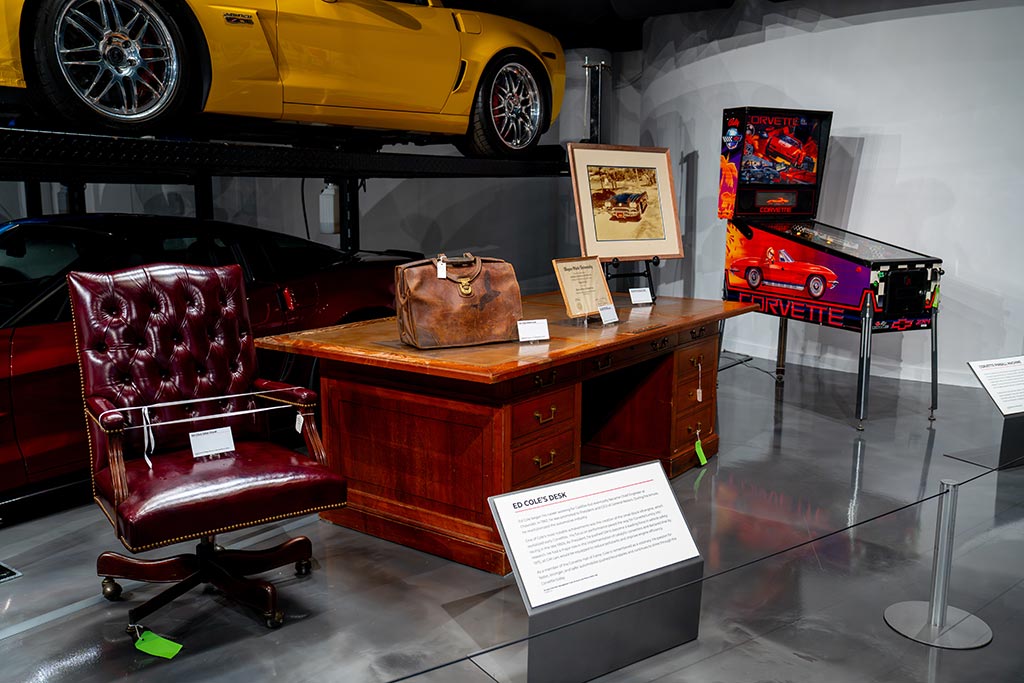
“This new exhibition helps visitors see what it takes to keep Corvette history accurate, accessible, and ready to teach,” said Robert Maxhimer, Director of Curatorial Affairs and Education. “From cataloging artifacts and monitoring conditions to the hands-on care of vehicles like the 1962 Corvette rescued from the Sinkhole or engineering development cars, this exhibition shows that stewardship is active work. It is how the Museum protects America’s Sports Car and the stories that come with it for research, interpretation, and the next generation.”
Among the vehicles featured in the exhibit:
1979 Engineering Development Corvette
Built with experimental components to test changes for the 1980–81 model years, this car helped validate the Bowling Green Assembly Plant line and train new hires.
1958 Corvette Chassis
Displayed as a bare frame, it shows the structural backbone of the car and the work involved in a frame off preservation project.
1967 Corvette Sting Ray “Sweat Hog”
A second generation racer with New York roots, this Corvette won the 1974 Northeast NCCC championship and remains roughly 85% original despite multiple racing incidents.
1989 Corvette Snake Skinner II
A lightweight ZR 1 prototype built to push performance boundaries in response to the Dodge Viper. One of 84 pre production ZR 1s, it later ran the quarter mile in 11.88 seconds.
1962 Tuxedo Black Corvette
One of the eight cars damaged in the Museum’s infamous 2014 sinkhole collapse. Recovered three weeks later, it was restored in 2017 with an emphasis on preserving original fiberglass and straightening the frame.
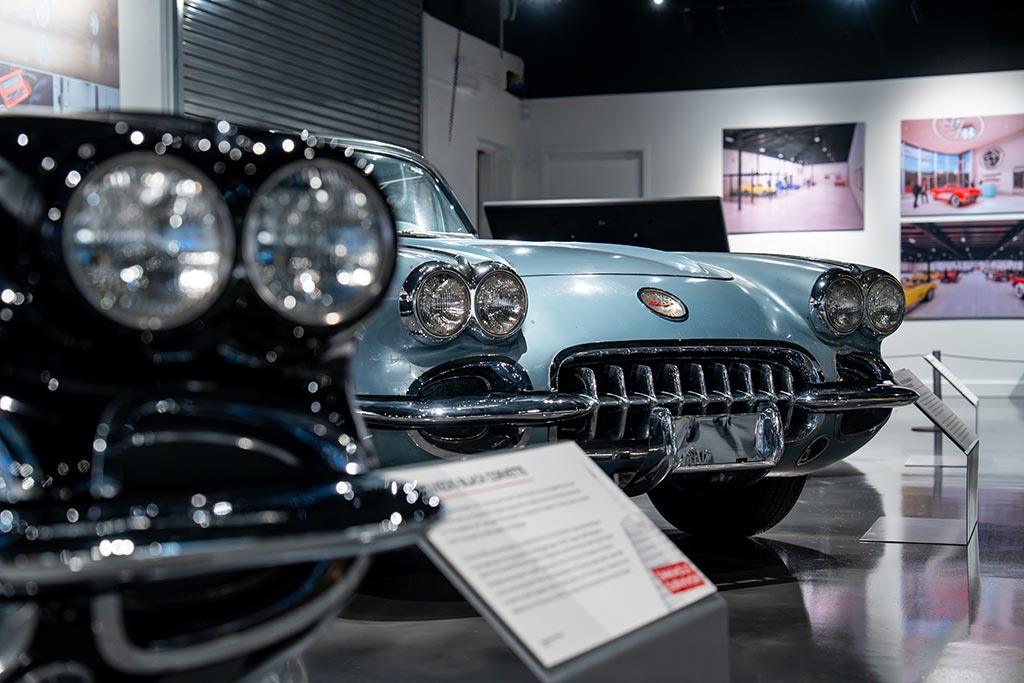
The exhibition takes up residence in the Museum’s Limited Engagement Gallery as construction continues on the new 66,000 square foot National Corvette Museum Collections Facility. Once complete, the building will support long term storage, vehicle preservation, and artifact conservation. Guided tours are expected to begin in spring 2027, giving visitors unprecedented access to the Museum’s collection.
Source:
National Corvette Museum
Related:
[PODCAST] Corvette Today #308: Meet the New Board Chairman for the NCM – Michael LaRocca
[PICS] National Corvette Museum Gives the One Millionth Corvette a New Display
Register Now for the 2026 Michelin NCM Bash at the National Corvette Museum
Subscribe Now:
![[PODCAST] Corvette Today #332: The Election Process for the Corvette Hall Of Fame](https://www.corvetteblogger.com/images/content/uploads/2026/08/082426_6-218x150.jpg "[PODCAST] Corvette Today #332: The Election Process for The Corvette Hall of Fame")