
Charismatic Former vice chairman of General Motors, Bob Lutz, said “Americans buy horsepower, but drive torque,” to emphasize the importance of the engine output metric that doesn’t earn headlines. If he’s right, then his previous employer just revealed the greatest, or at least the most “drivable,” naturally aspirated production V8 ever made.
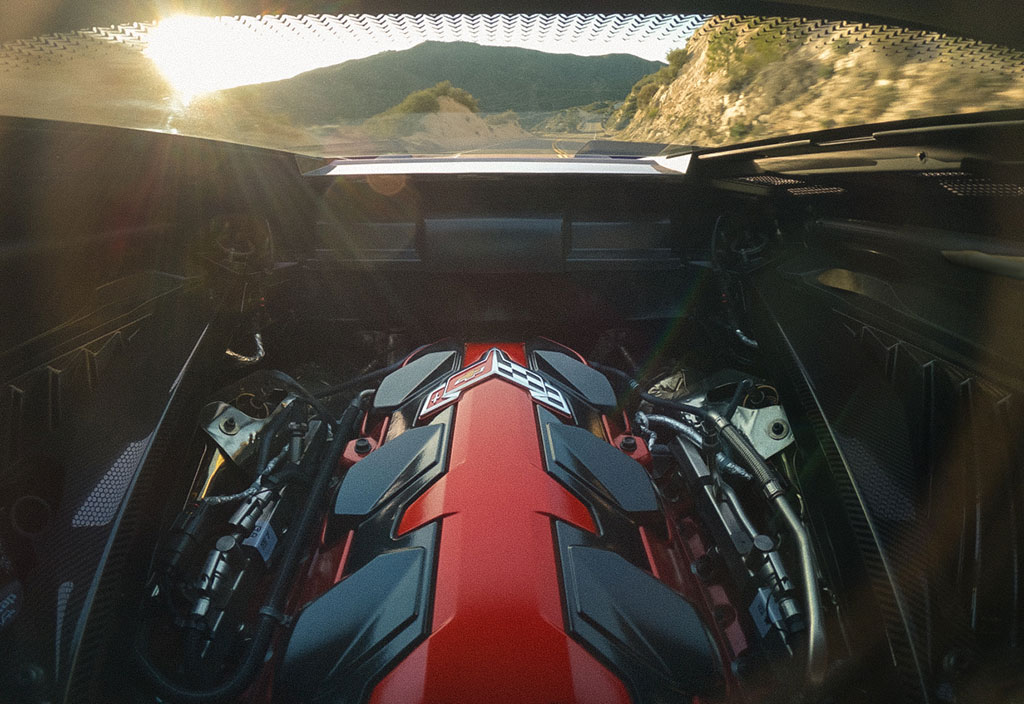
The LS6 that’ll motivate all 2027 Corvette Stingrays, Grand Sports, and, with the assistance of the front-mounted e-motor, Grand Sport Xs has the second largest displacement of any Chevy Small-Block in history and is the third performance V8 of its name – It’s all very Game of Thrones-y, and the confusion that the various Aegons bring is an excellent metaphor, just know that the new GS motor is second only to the C6 Z06’s legendary motivator in “Small” Block displacement and carries the same name as the 1970 Chevelle’s top 454 (that boasted the highest HP rating of any ‘60s and ‘70s Muscle car) and the C5 Z06 that democratized supercar levels of performance.
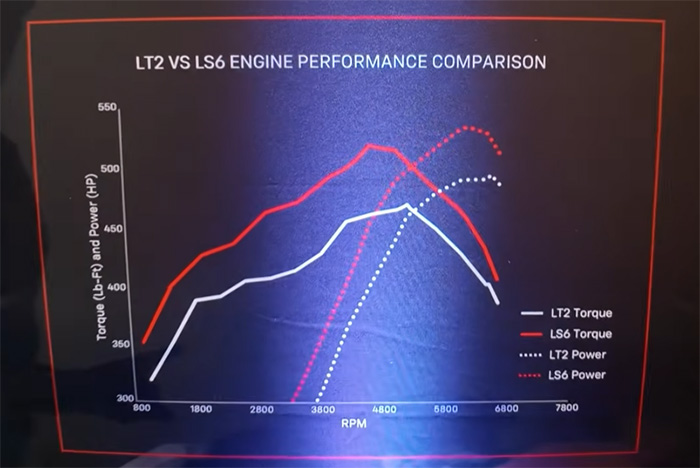
To say the new LS6 is in good company is like saying the 1927 Yankees lineup was decent, and one century after the Yank’s “Murderers’ Row” swept the Pirates for the club’s second World Series title, Chevy’s 6.7L outmuscles its own murders row of hall of fame predecessors and every naturally aspirated V8 the other Detroit manufacturers have ever produced. Its 535 HP outclasses the larger C6Z motor by 30, the C5Z by 13, and bests the mighty Chevelle by 85. It’s out in front of Ford’s Coyote, flat-plane Voodoo, and classic Boss 429 – though, credit where credit’s due, The Blue Oval has a real knack for cool names! The old 426 Hemi is left gasping for air, and Dodge’s modern 392 “Apache” is 50 ponies shy, even in its top state of tune.
 Screenshot Credit: The Straight Pipes
In fact, the LS6 is the most powerful naturally aspirated V8 GM has ever produced, other than the flat-plane DOHC marvel under the glass of the LS6’s current Z06 stablemate, but that’s graded on a different scale. Even with all of the above bragging rights, horsepower isn’t even the LS6’s most impressive trait. That distinction, if you missed the title and opening quote, goes to its massive torque figure.
The LS6 torque curve peaks (“peak” is used lightly, here, because we’re talking about a mostly flat line) at 520 lb-ft. Chevy claims that’s more twist than any other free-breathing production V8 ever made, and we’re going to put that statement to the test below, but the fact that it equals the first (LB7) Duramax’s – which is a diesel with a turbo built for effortless torque-y towing – torque rating means Chevy should be pretty confident in its boast.
| VEHICLE | V8 ENGINE | TORQUE (lb-ft) |
|---|---|---|
| 2017 Corvette Grand Sport | 6.7L LS6 | 520 |
| 2014-15 Camaro Z/28 | 7.0L LS7 (in its final form) | 481 |
| 2020 Corvette Stingray | 6.2L LT2 | 470 |
| 2023 Corvette Z06 | 5.5L LT6 | 460 |
| 1970 Chevelle SS 454 | LS6 Big Block | 500 (SAE Gross) |
| 2002-2004 Corvette Z06 | 5.7L LS6 | 400 |
| 1970 Buick GSX | Stage 1 455 | 510 (SAE Gross) |
| Dodge Challenger Scat Pack | 6.4L “Apache” Hemi | 475 |
| Ford Mustang Dark Horse | 5.0L “Coyote” | 418 |
| Shelby GT350/350R | 5.2L “Voodoo” | 429 |
| Mercedes SLS AMG Black Series | 6.2L “M159” | 468 |
| Ferrari 458 Speciale | 4.5L “F136” | 398 |
| Silverado 2500 HD | 6.6L L8T | 464 |
| Ford F250 Super Duty | 7.3L “Godzilla” | 475 |
So, there you have it, every non-turbo, non-supercharged V8 that makes significant torque in a production vehicle across the globe spanning from the glory days of Mo-Town muscle cars to recent efforts from all of America’s “Big Three” kings of twist, a few notable exotics, and even the two beastliest Heavy Duty gas truck engines for sale today, and nothing except for the big bore classics (which weren’t worth listing beyond the top-dog 454 and 455 due to their outdated, less-stringent testing process) landed within 50 lb-ft of Chevy’s new masterpiece!
Related:
[VIDEO] Round Up of all the 2027 Corvette Grand Sport ‘First Look’ Reviews
Chevrolet Reveals the 2027 Corvette Grand Sport and Grand Sport X Plus Other Changes for the Upcoming Model Year
Spring is Here and Temperatures are Climbing. Keep Your C8 Cooler with DynamicDucts Air Deflectors!
Subscribe Now:
![[VIDEO] Watch a Corvette ZR1X Run the 55th Annual Virginia City Hill Climb](https://www.corvetteblogger.com/images/content/uploads/2026/09/093026_1-218x150.jpg "[VIDEO] Watch a Corvette ZR1X Run the 55th Annual Virginia City Hill Climb")
![[VIDEO] Goonzquad Tears Apart Their Wrecked C8 ZR1...It's Worse Than They Thought!](https://www.corvetteblogger.com/images/content/uploads/2026/09/092926_17-218x150.jpg "[VIDEO] Goonzquad Tears Apart Their Wrecked C8 ZR1…It’s Worse Than They Thought!")

Did you mean to list the first item on the chart as a “2027”, not a 2017 GS?
GM should have left GSX in 1970. The renaming is horrible.
Lutz contributed to the stupidity of motorists by implying torque does anything. It is only horsepower that moves a vehicle – torque and rpm must be combined. It is a shame when someone famous dumbs down people.
1970 Cadillac 500 rated at 550 SAE gross.
Alan is completely clueless about torque vs Horsepower. It’s a mathematical equation based on torque. I won’t waste my time Alan…do a search and understand how it works. Horsepower is how the average individual spends money on performance. Torque wins races.
Nice pull with the Caddy 500, Robert!
Keith and I were just talking about it, and the perfect headline for this one requires too many disclaimers. The new LS6 technically has the highest net torque rating ever from a production naturally aspirated performance-oriented V8. It’s doubly impressive that the new 6.7 also beats a ton of engines that don’t meet all the same criteria.
The switch to net did drop ratings to 80 or 90% of where they were in gross. That puts the 500ci at 495 lb-ft, drops the Stage 1 Buick to 459, and the Chevelle LS6 to an even 450, at best on the proper scale.
My stock 70 Eldorado was in the Guinness Book of World Records for over 30 years for the most powerful production car. 550 lbs of torque. Look it up.
In theory, torque measures engine twist and horsepower measures how much work that twist can do at a given engine speed. Horsepower and torque are mathematically connected through the formula: Horsepower=(Torque X RPM)/5,252. This means torque at low RPM contributes less to horsepower, but torque at higher RPMs translates directly into higher horsepower, which explains why engines with modest torque can still achieve impressive top speeds if they can rev high.
Sidebar: The denominator 5,252 is the circumference of one revolution and you get “5,252” formula above. This is why dyno charts always have the hp and torque lines crossing at 5,252 rpm as long as torque is being measured in pound-feet and hp is being measured in mechanical hp. Thanks, Ray
Comments are closed.