

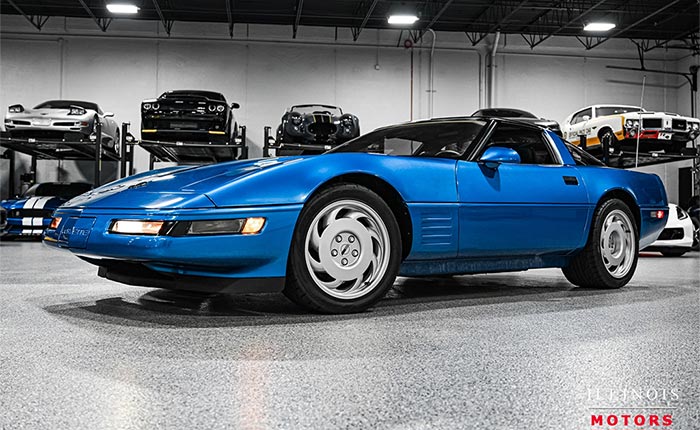
No alphanumeric carries more weight in American automotive circles than ZR1 (sometimes written ZR-1). When you’re lucky enough to catch a glimpse, you know that the car it’s attached to is the absolute tip of the General Motors performance spear: the fastest, most powerful, and most exclusive Corvette of its era and a bona fide exotic-killing supercar, in its own right. To date, just four ‘Vettes have earned the right to be called ZR1s.
Genesis: The C3 ZR1
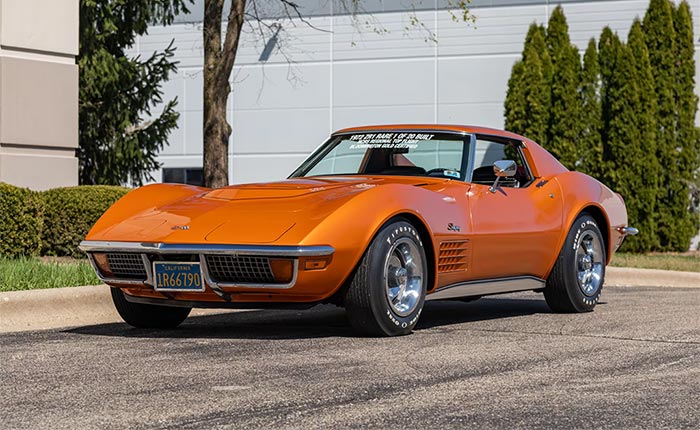
The moniker has humble origins as a special lightweight handling RPO only available in conjunction with the C3’s legendary LT-1 small-block V8. These initial ZR1s dropped heavy refinements like power windows, defrosters, AC, radios, and power steering while forcing the M22 “Rock Crusher” close-ratio 4-speed manual transmission and adding exclusive, track-ready upgrades headlined by heavy-duty power brakes and suspension components, including special springs, shocks, and stabilizers. This expensive option package was available from 1970-72 and is, by far, the rarest ZR1 in history. For 1970, just 25 customers forked over the $968.95 required to turn their $4,849 Corvette into a corner-carving maniac. That was followed by just 8 the following year when the RPO’s price inflated to $1,010. These ultra-scarce ’71 ZR1s were supplemented by the one-year ZR2 package that paired all of the same handling bits with the heavier but burlier 454-cube LS6 for an eye-watering $1,747 and sold like comparative gangbusters with 12 orders. A final run of 20 ZR1s for 1972 would bring the grand total to a scant 53.
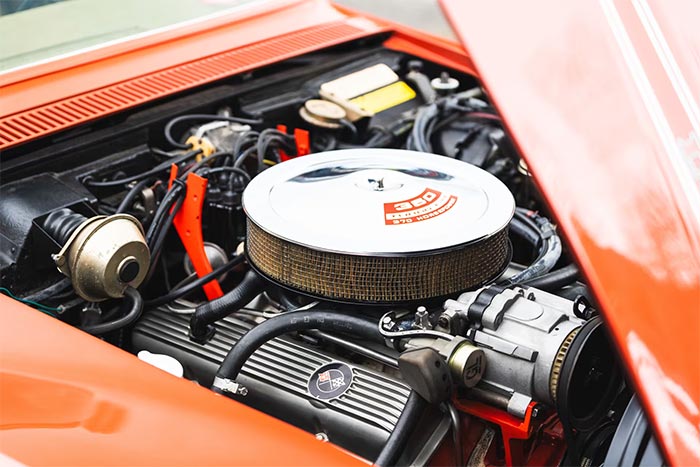
As you might imagine, more than a blue moon passes between instances of one of the 53 changing hands (doubly so for their 12 large-bore siblings), but, amazingly, this month’s Mecum Auction in Indianapolis will see nearly 4% of all C3 ZR1s ever produced crossing the block. Lots S48 and S260 will both be searching for new homes on Saturday, the 18th. The former combines first-year prominence with the wide-open 370-horse LT-1 and a convertible body style that Hagerty pegs at between 20% and 38% more valuable, all wrapped in a stunning Bronze over Saddle getup, making it the undisputed belle of the ball. S260 is no slouch, though. While emissions regulations, a drop in compression, and a transition to SAE Net HP ratings conspired to choke its 5.7L V8 to the tune of 255 ponies, it brings some definitive C3 stuff like Ontario Orange and T-Tops to the table, and while the ’70 is only Bloomington Gold Certified, the ’72 has that and more. The NCRS bestowed a Top Flight Award, Performance Verification, and the Duntov Mark of Excellence.
The “King of the Hill” C4 ZR-1
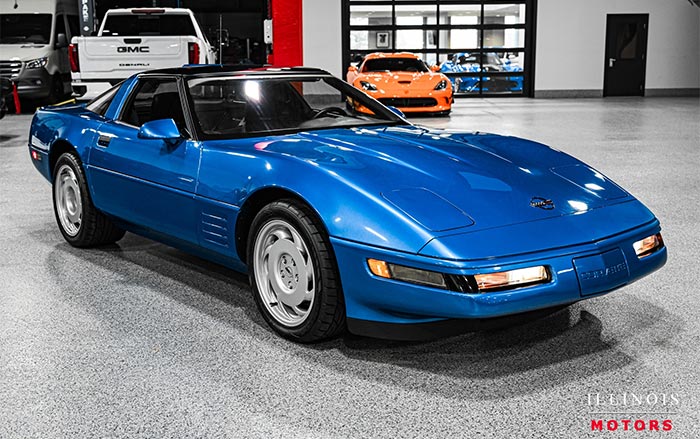
Nearly 20 years after the “ZR1” option package faded into memory, it was dusted off as a stand-alone model that would set the blueprint for all that would follow. In the late 1980s, General Motors wanted to flex its engineering might and put American performance back on the map with the C4 Corvette that was already hailed as one of the best-handling cars in the world. Newly acquired Lotus was tapped to create an almost clean-sheet (Chevy’s signature 4.4-inch bore spacing was retained) engine design. What resulted is still the stuff of legend and the only DOHC in pre-2023 Corvette history: the 32-valve LT5. When it hit the scene as a 1990 model, it made 375 horsepower. Remember, this was a time when the base ‘Vette could only muster 245 ponies, the Porsche 911 was pushing 247, and the most potent Mustang you could buy was the 225-horse 5.0. If you wanted more grunt, you had to climb all the way to the flat-12 of the Ferrari Testarossa, which was only richer by five at 380, or the 449-HP 25th Anniversary Lamborghini Countach; it was an absolute animal. Overall performance was key to its success, too, and the LT5 was bolstered with cutting-edge tech like Bilstein adaptive dampers. All of this came at a cost; ZR-1s infamously wore an MSRP around double that of their lesser brethren. Still, they sold well – often at a premium – in the beginning, with Chevrolet moving an impressive 3,049 and 2,044 in ’90 and ’91, respectively. Ironically, demand would crater to 502 examples in 1992 when the base Corvette received the second-generation LT1 V8 that used lessons learned from the LT5 project to bring near ZR-1 performance to showrooms for a 50% discount. To combat this internal threat posed by the upstart Dodge Viper and its 400 HP V10, the LT5 got an upgrade to 405 horses, and production was capped at exactly 448 units per year for the three years left on the docket. In total, 6,939 of the Corvettes that put American performance back on the map were pieced together.

The combination of the ZR-1’s significance in its own time and its relatively high production numbers have led to one of the most polarizing single-model markets in the modern car collecting world. There’s never any shortage of ultra-low mileage examples that were purchased and immediately put away as investments, but ones that were driven a bit remain some of the best buys in the white-hot and nostalgia-driven ’90s segment. If we were building a “Welcome to the family, C8 ZR1” collection around one of the C3s above, we’d be inclined to look to the time capsule side of the spectrum. There are several delivery mileage examples on the market today, but the one that stands out from the pack is this Quasar Blue 1991 vintage with under 1,000 miles. While it isn’t one of the usual suspects (“peak ZR-1” is a hotly debated topic with most folks falling into one of three camps: first year, 40th Anniversary, or ’95), the beautiful, period-perfect, and rare color put this one over the top. Quasar Blue was available for four years but only found its way to 112 total ZR-1s, the bulk of which (71) share 1991 VINs. The fact that it also has a Corsa exhaust system is the cherry on top; if you aren’t going to drive it, at least let the LT5 sound its best when you fire it up every couple of weeks to keep things in running order! It can be yours for $89,800, not too shabby for a genuine piece of Corvette, GM, American, and Automotive history at large!
The “Blue Devil” C6 ZR1

The Z06 nomenclature that hadn’t been seen in a Corvette order guide since Zora snuck a track package into the 1963 literature rose to prominence during the C5 generation with a C3 ZR1-like focus on lightweight, handling, and bringing C4 ZR-1 levels of power to the masses. From 2001-04, the C5Z set the blueprint for an incredible new type of Corvette that ended up getting a sequel in 2006, year two of the new C6’s lifecycle. That monster 7.0L development upped the ante once again as the first ‘Vette with 500+ horses from the factory, but upon driving it for the first time, then-GM CEO and Duke University alum Rick Wagoner challenged the Corvette team by wondering aloud, “If you can build this for $60,000, what could you make for $100,000?” Thus, the next world-beater worthy of the ZR1 mantle was willed into existence, and to answer Mr. Wagoner’s question, the extra $40,000 went A LONG way! The C6Z’s three-year-old power record was shattered to the tune of 638 supercharged horses, which propelled the ZR1 past 200 MPH, a first for the Crossed Flags brand. Magnetic Ride Control was standard, steel brake rotors were tossed aside for bigger, yet lighter and fade-resistant carbon ceramic units – the same specification found on the $659,000 (in 2002) Ferrari Enzo. Carbon fiber was utilized all over, including the signature be-windowed hood and the clear-coated roof. Like the C4 before it, it mixed all-day comfort with unmatched straight-line grunt, and it stuck in the corners like a dream. Lap records fell to the Blue Devil (the nickname was a nod to Wagoner’s school) around the globe, including at famed ribbons of tarmac such as Laguna Seca and the Nürburgring (twice!), where it improved on the Z06’s already blistering time by more than 15 seconds. It was on sale for a five-year span, during which it avenged its predecessor by forcing the Viper out of production for a couple of years and then spoiling its reintroduction before bowing out in favor of the C7. In all, 4,695 units left Bowling Green, making C6 ZRs non-trivially harder to find than the first mass-produced ZR-1.
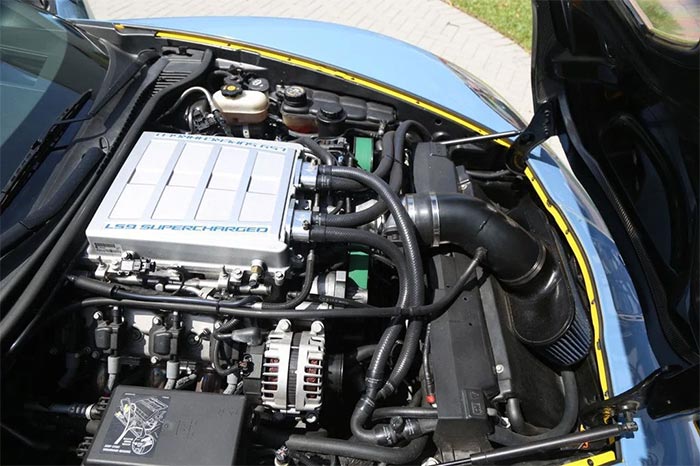
As the overengineered hero that kicked off a 15-year supercharger arms race with volleys including 662, and 760-horse Shelbys, Cadillacs and Camaros with LSA and LT4 power, and nearly a decade of ever-escalating Hellcat Challengers ranging from 707 all the way up to 1,025 HP, not to mention multiple successors to the forced-induction Corvette throne (more on that, later) the C6 ZR1 has found an exciting second career as a blank canvas. Look at listings, and you’ll be met with any number of outrageous builds. Whether they simply upped boost or added smaller pullies and bigger blowers, all of them leveraged and tested the LS9’s bulletproof foundation in ways that still turn those four wonderful circular tail lights into a common site for modern strip, street, and road course contenders. Since the best ZR1 of 2024 (the one that led off our popular late-January C6s for sale post) finally found a new home, we’re going to point you toward a shining example of a ZR1 in its second act. Check out this 2010 ZR1 in all of its modded Hellcat-scaring glory! It started life as one of 272 Velocity Yellow ZR1s ever built (89 in ’10), but is now wrapped in a stunning but more subdued than “Rapid” shade of powder blue, reminiscent of Mercedes-Benz China Blue… and the tell-tale color of the Blue Devil’s bitter rivals from down the road. The extensive build includes porting and a parts list that would be more than 25 bullet points long. You can read the particulars for yourself, but, per the selling dealership, Fort Lauderdale’s 1 of 1 Motorsports, the sum of those parts is a dyno-certified 908 HP at the fat rear slicks on e85. Even the new one might struggle against this thing when the Christmas tree goes green!
The Swansong C7 ZR1

It’s pretty well known at this point that the Corvette team intended to move the engine behind the cockpit of their brainchild one generation earlier, but the financial crisis of the late 2000s not only put the kibosh on that idea, it put the entire future of America’s Sports Car in jeopardy. The fact that it was one of the General’s most profitable model lines saved it from a date with the gallows, but an expensive change of layout would have to go on the back burner. The C7 that we got could be called a stopgap – and its abbreviated, six-year shelf-life leads credence to that claim – but the C7 generation that we got ended up being the perfected version of the front-engine Corvette formula that had been winning over hearts and minds since 1953. After spending the first five of those years insisting the C7 lineup would be comprised of Stingray, Grand Sport, and Z06 only, Tadge and Co. pulled the white sheet off of a surprise winged farewell. All of the Corvette faithful knew a proper sendoff was absolutely necessary, and we will forever appreciate and even revere the team behind its track-slaying 755-horsepower manifestation! So, after the C7 barely one-upped the C6 ZR1 in most categories (though, in true Z06 fashion, it did it for a fraction of the price), the ZR1 was, once more, the thrower of gauntlets. Not only was it more powerful, but went faster – top speed was up to an astounding 212 MPH – got there quicker – sub-three-second sprints to 60 and tens in the quarter at 135 MPH or higher were all possible – and somehow stopped and cornered even better, once again embarrassing blue bloods on the biggest stages while offering every amenity available. Even as a one-and-done, the C7 is the rarest version of the ZR1 since the original, and it was also the first one since the C3 with the option to go topless. Total production reached 2,953, which is impressive considering the hype around the significant change for 2020 and the still all-time-high starting price of $125,090.
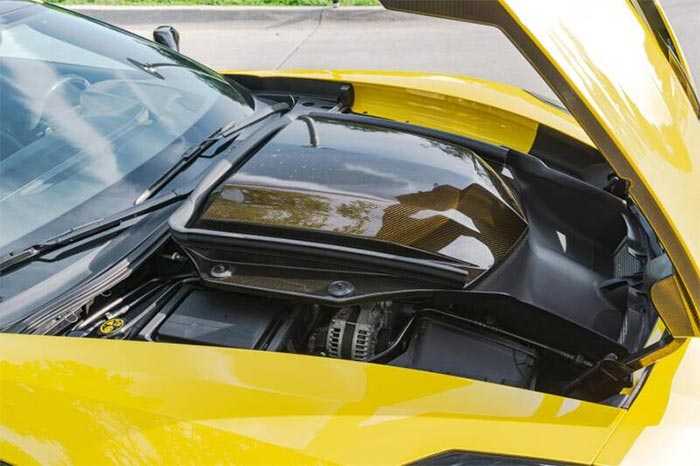
Our choice to round out your pre-C8 collection of ZR1s is one of the 117 examples painted in the awesome C7.R-aping Corvette Racing Yellow. It also brings the two must-have options to the table in the ZTK track package and the 7-speed manual transmission. With low miles, this combo regularly commands in excess of a quarter-million dollars (which is a crazy amount of appreciation for a car that’s only five years old!), but with almost 10,000 miles, this example is a driver. We couldn’t be happier about that fact, and to make things even better, those miles have kept this knockout under $200,000, which is, unfortunately for buyers, an outstanding deal in 2024!
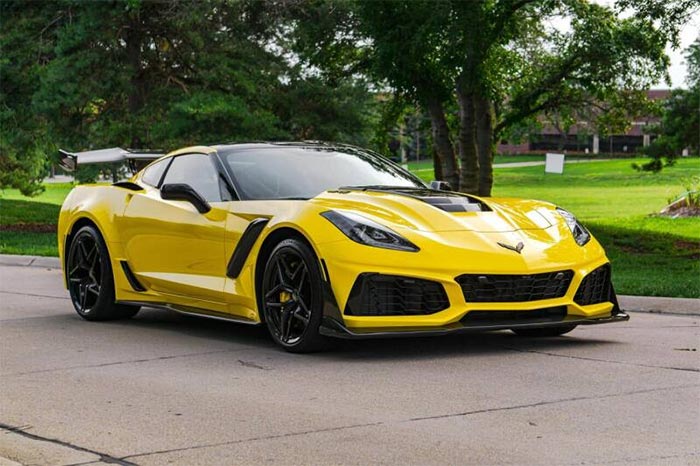
So, there you have it, four separate generations of unbridled excellence spread out over a 49-year period, all leading up to a fifth member to be revealed this summer. All we know is that it has some big shoes to fill, but based on the way its cohort has played out up to this point, it shouldn’t disappoint!
Related:
[SPIED] Listen to Multiple Corvette ZR1 Prototypes at Idle
[VIDEO] Here is Everything We Know About the 21 C8 Corvette ZR1 Prototypes Already Built
[VIDEO] Chevy Teases the Reveal of the Corvette ZR1
Subscribe Now:
![[POLL] HOT OR NOT? C7 Corvette Z06 at Costco Rocking a Mural Wrap](https://www.corvetteblogger.com/images/content/uploads/2026/05/051626_3-218x150.jpg "[POLL] HOT OR NOT? C7 Corvette Z06 at Costco Rocking a Mural Wrap")

This is a dream Corvette collection. I’m so glad the financial crisis of the late 2000s kept the C7 from being the first mid engine generation.
People will line up if GM built the C7 ZR1 again. Probably sell many more than C8 Z06 cars.
Comments are closed.