


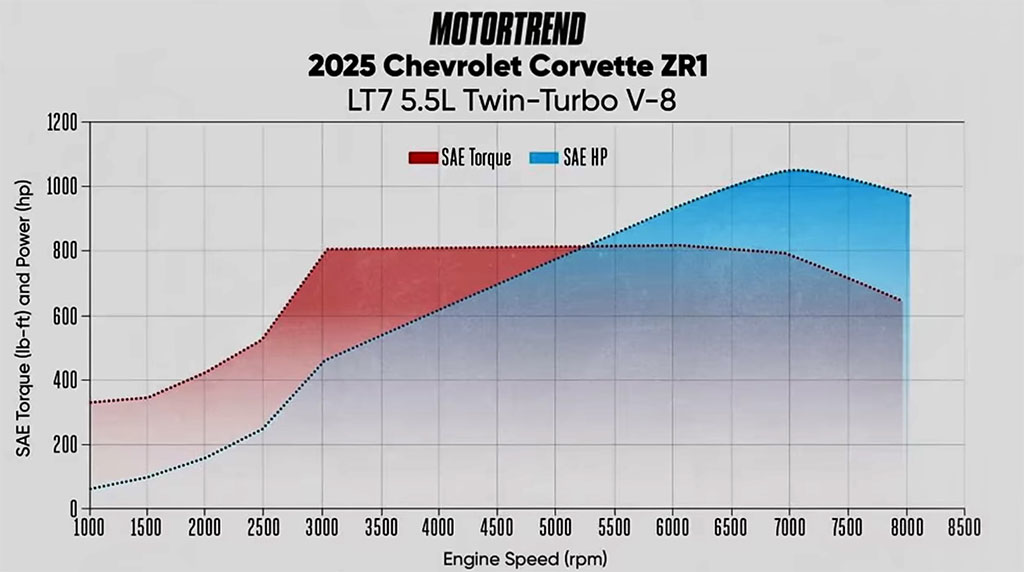
We already know the numbers on the forthcoming 2025 Corvette ZR1, but how did Chevy’s engineering team find a way to coax a whopping 1,064 horsepower from the LT7?
For an explanation, Hot Rod magazine decided to visit automotive engine calibration engineer Greg Banish for his insight into the magic that created the most powerful V8 engine produced by a U.S. automaker.
We’ll hit the highlights for you here, but if you’re interested in a deeper dive, check out the full story here.
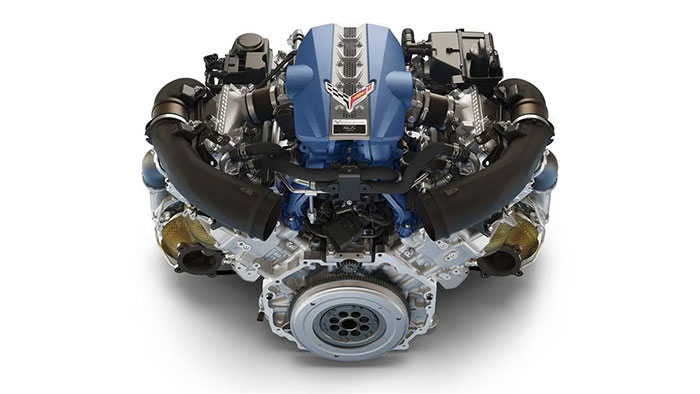
First of all, Banish makes no secret that he is “nothing short of impressed” with the new engine, and that’s coming from an engineer with some 25 years of experience in OEM and aftermarket performance applications. He further adds that he isn’t really surprised by the engineering behind it, but instead that management gave the OK to go ahead and build it.
But how did they do it?
For one thing, Banish explains that the twin turbochargers take advantage of usually wasted exhaust gases. “Yes, the turbine adds some backpressure and pumping losses to the engine, but this still works out to be a much smaller number than the accessory load of your typical supercharger at full load,” he says. “When we are talking triple-digit horsepower to drive a supercharger, moving to much less costly turbocharging looks tasty if you have the room for the hardware.”

And unlike front-engine Corvettes of the past that had limited space under the hood for turbochargers while meeting other engineering requirements, the new mid-engine layout of the C8 offers no such problems, he notes.
As for the ZR1’s “only” 828 lb-ft of torque, Banish says Chevy could have increased that figure but would have likely reduced the reliability of the engine and transmission.
In this day and age of federal pollution guidelines, Chevy was still able to meet the new LEV4 emissions standards partly by using huge 67mm turbine wheels that also prevent turbo lag as well as integrating the exhaust manifold and turbine housings, “reducing the amount of metal in contact with the exhaust gases so this heat can be passed along downstream rather than absorbed by the metal,” he says.
As for possible improvements to the new engine, Banish says he’s not really concerned with increasing the horsepower because “this car could make 2,000 horsepower and it wouldn’t be much faster to 60 mph with the same two tires pushing.”
Instead, he would focus on ways to keep the existing power at such high levels without dropping as the engine gets hotter. “It remains to be seen how much cooling capacity there is in those two water-air intercoolers and their front heat exchangers,” he says, noting that every similar system he’s worked on in the past has benefited from efforts to reduce the water temperature. His choice would be more exotic front heat exchangers or an A/C chiller retrofit, thereby letting the factory ECU make adjustments when it sees the cooler temps.
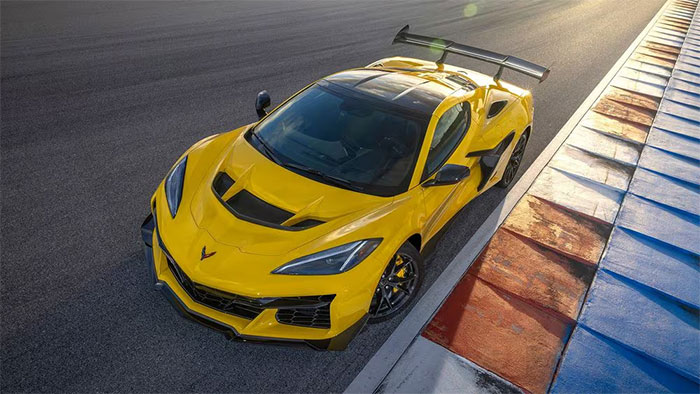
Furthermore, another couple of additions might be switching to stickier tires (though that could test the limits of other driveline parts on the drag strip) and using some ethanol fuel, which he believes could help with knock suppression and cooling.
In the end, though, like so many other enthusiasts, Banish is impressed with the stock factory performance, concluding that “Dr. Goddard would be proud of what the engineers at Chevy have done here.”
Source:
MotorTrend.com
Related:
[SPIED] Corvette ZR1s at a Retirement Party for Tadge
[SPIED] Another Walk Around Tony Roma’s 2025 Corvette ZR1
[SPIED] 2025 Corvette ZR1 Prototype Parked on the Street in Downtown Detroit
Subscribe Now:




This write-up from Mr. Banish is the best one I have read since the 25th of June, great job to him to explain this engine technology.
But I have a question for any automotive Mechanical Engineer out there that knows about internal combustion engines: according to the dyno chart and Mr. Banish the torque of this 1,064 HP masterpiece from Chevrolet is maxed out at 800 lb.-ft. at 3,000 rpm then lays flat until it drops off at about 6,300 or so rpm.
So, with the rise in HP to a max of 7,200 rpm, where does the remainder of the torque go to in the drivetrain as HP continues up to 1,064 HP maximum created?
The rational concept of torque following horsepower up the dyno chart to the drop off rpm is not being used in this Corvette ZR1 drivetrain. Did the Corvette Team blow up transmissions that were not built for higher torque levels beyond this 800 lb.-ft. as shown? What does the future look like for the ZR1 transmission?
Perhaps a beefy, stronger Tremec T56 Super Magnum 6 speed transmission will be the solution for both HP and high torque.
Thanks for listening – and your reply Mr. Engineer.
“The crown and ring lands are specified to withstand a target cylinder pressure, usually something on the order of 120 bar (1700 plus psi) for the typical production turbo engine, before they start denying warranty claims from overloading. The height of this torque table is likely a direct representation of how much cylinder pressure GM is willing to tolerate inside the LTZ.(“Hot Rod, by Greg Banish. Aug 14 2024).
Note: Dr. Robert Hutching Goddard, Genius Physicist (1882-1945)
Father of modern rocket propulsion.
Thanks,
Ray
Mitch thank you for your cliff notes version of this article that was to the point and easy to understand. Earlier tonight I read the full version of this article on the Motor Trend daily newsletter. It contained too much boring bullshit that I had to concentrate on too much on to try to understand. Then again I’m not an automotive engineer.
Mitch, feel free to reach out to me directly if you want a comment or direction on your next article.
Comments are closed.