


General Motors and its OnStar division are facing sweeping new restrictions after federal regulators determined the company had quietly collected and sold sensitive driver information for years.
Under a proposed settlement announced by the Federal Trade Commission, GM will be barred from sharing drivers’ precise location and behavior data with consumer reporting agencies for the next five years. The order also requires the automaker to obtain explicit, opt in consent before gathering any connected vehicle data.
The case began two years ago after a New York Times investigation revealed that GM and OnStar were harvesting data through the company’s Smart Driver program—marketed as a safety tool meant to encourage seatbelt use and better driving habits. In reality, the investigation found that GM was selling detailed driver information to data brokers such as LexisNexis and Verisk, which then passed the data along to insurance companies. In some cases, drivers saw their premiums rise without ever knowing their own car had helped make it happen.
GM says it has since ended its contracts with both companies and shut down the Smart Driver program in April 2024. In its final order, the FTC accused GM of an “egregious betrayal of consumers’ trust” and prohibited the company from disclosing geolocation or driver behavior data for five years, except in limited circumstances such as assisting emergency responders.
GM says it has already begun complying with the new requirements. Customers picking up a new GM vehicle are now asked at the dealership whether they want to allow data collection when enrolling in OnStar services. The company notes that OnStar features still function even if the customer declines.
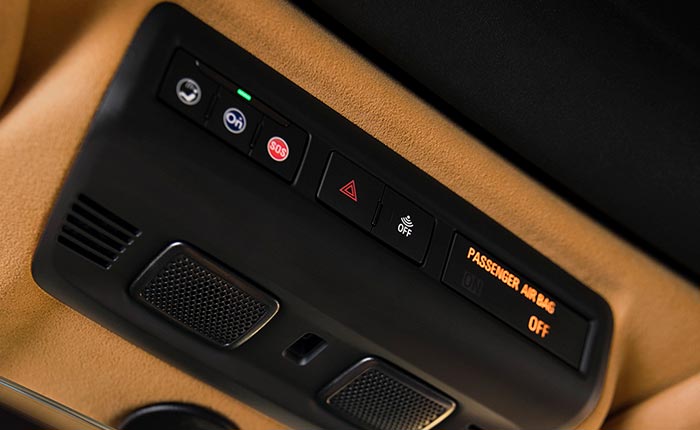
GM also says it will continue collecting some information for internal research, but the data will be anonymous, stripped of identifiers, and cannot be used for marketing or sold to third parties.
Under the settlement, GM must also delete or destroy all previously collected driver data, except when it is legally required to retain information for law enforcement purposes. Otherwise, none of the data gathered in past years can be used again.
You can read the full decision from the Federal Trade Commission here.
Source:
Federal Trade Commission via AutoEvolution
Related:
GM Ends Program that Shared Customer Driving Data with Brokers and Insurance Companies
GM is Now Facing a Lawsuit for Selling OnStar Driving Data to Insurance Companies and Data Brokers
[VIDEO] Check Your MyChevrolet App to Opt Out of GM Sharing Your Driving Habits with Insurance Companies
Subscribe Now:

![[PODCAST] Corvette News and Headlines with CorvetteBlogger on the Corvette Today Podcast](https://www.corvetteblogger.com/images/content/uploads/2026/06/062226_6-218x150.jpg "[PODCAST] Corvette News and Headlines with CorvetteBlogger on the Corvette Today Podcast")


I suspect that OnStar reported my Driving Habits to my insurance Company, My premiums almost doubled the following year. I had to find a new Insurance company after more than 40 years! It took me almost 2 months to find the switch to turn off that feature, I was shocked at what I seen as my driving habits. Hard accelerations, hard stops and a few other things it recorded me doing. GM is screwing the people that pay their salary by purchasing and servicing GM vehicles. 🤬
” . . . prohibited the company from disclosing geolocation or driver behavior data for five years . . . ”
So, after five years, can they go back to collecting and sharing driver data?
Montana Bob
” . . . prohibited the company from disclosing geolocation or driver behavior data for five years . . . ”
So, after five years, can they go back to collecting and sharing driver data?
Montana Bob
On Star and GM hosed us when they selectively stopped serving customers with older cars.
Canada had a switch they could put in their cars and continue to use OnStar services (per GM rep) but not in the USA? Totally nuts and I will not buy another car with these services unless they last forever or as long as the owner wants the services.
The almighty dollar. You would think GM would be satisfied selling their cars and reaping the profits from sales. They decided to stick it to their customers after the sale.That’s pretty low for a company the size of GM to stoop to this level. I hope somebody sues them for invasion of privacy. I also hope that there sales suffer as a result.
Selling a performance car like a Corvette (among others) and selling the information that ultimately finds its way to insurance companies is such a betrayal to customers and a black eye to GM. Shame on GM!
Solved that problem 6 years ago on my new C7. Called GM and told them to shut down my account and delete it. Since I have never received any reports and the My Chevy account shows it not working. Free Satellite radio was never turned off. I don’t need OnStar for directions, that’s what the built-in and updated navigation system is for. Also can use Waze through Android Auto.
Listen as awful as this is, your phone company is doing it, life 360 is doing it, they make so much by selling you data, even airtags are giving out this info. Anything with tracking is making money somehow without true consent.
This kind of shit is exactly why I never sign up for the program with my insurance company that monitors my driving. I don’t want them watching my driving and tracking me. They will just use the info as black marks against me!
Well it looks like the result for GM will not be enough to keep them from doing it again in a few years. Also nothing for the insurance companies that used the info to make more money by charging us all more even if we didn’t have a accident or a speeding ticket. I wonder if other car manufacturers are going this as well. That is where the real problem lies. GM should not have done what they did but without penalty to the insurance companies it will just happen again with other car manufactures getting paid for the info. Makes me think an old car might be the best to have and not something new that is going to spy on you and betray you.
George Orwell’s novel “1984” in which Orwell’s commentary on data privacy remains relevant as society grapples with the balance between security and individual freedoms. His insight encourages ongoing discussions about the ethical use of technology and the importance of protecting personal privacy in an increasing monitored world. First mod, 2/2016 C7 pull the OnStar fuse, now “OffStar.” Thanks, Ray
Comments are closed.