

We’ve all seen “clones” of popular muscle cars like a Chevelle SS, in which the creator admits up front that the car isn’t a real SS but has just been restored to look like one.
Nothing wrong with that, if everyone knows.
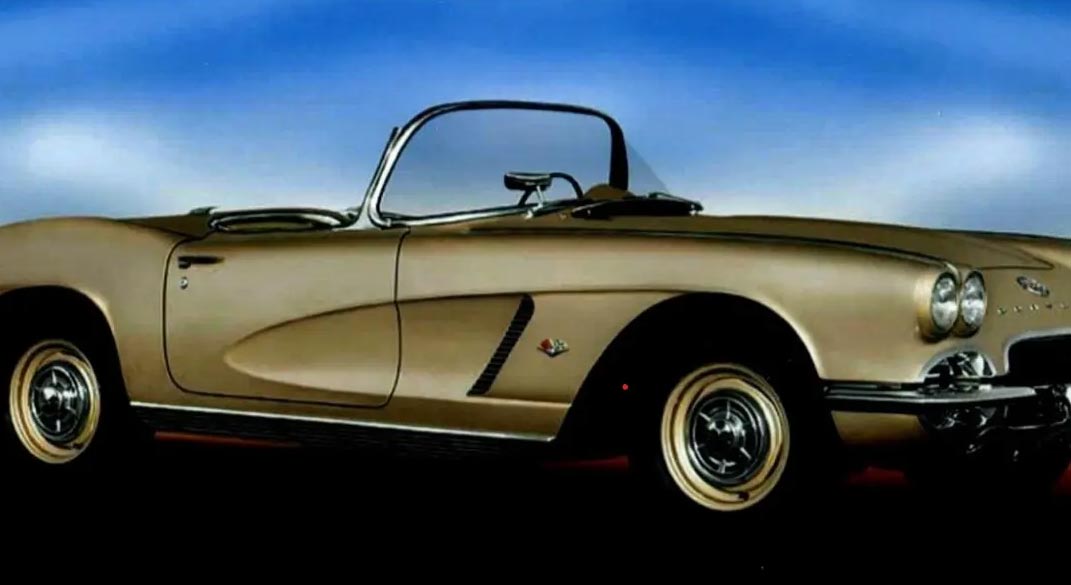
A cloning of another kind, however, is in the news this week as a Florida man is battling it out in court after he discovered his 1962 Corvette, which he’s owned for nearly 20 years, has the same VIN (Vehicle Identification Number) as a car now owned by a Texas couple.
Now, Dale Wilkinson is asking a federal judge in Texas to declare his ’62 the real car and has sued the owners of the other example, claiming their car is actually just a clone of his Corvette and could cost him hundreds of thousands of dollars if he ever tries to sell his.
“The loser has to go to their state police and have a whole new VIN issued for the car, and that ruins the value,” said Stephen Gehringer, a lawyer representing Wilkinson in the lawsuit. “It’s no longer a collectible item.”
Wilkinson says he bought his car in 2006 in Massachusetts, then found out about the alleged clone in 2022 after moving to Florida.
His lawsuit alleges that the duplicate VINs are not a simple paperwork error, but that someone actually built the Texas car intending to deceive others. Wilkinson points out that his claimed genuine car had more than 56,000 miles on it when he bought it, while the Texas car showed only 1,283. Furthermore, an expert hired by Wilkinson claims that the Texas car’s VIN tag is made of aluminum, not the actual steel used, and doesn’t even use the correct font.
The suit doesn’t accuse the current owners of the Texas car of building the alleged fake, but this incident proves the importance of valid documentation whenever purchasing a collector car.
Gehringer, whose Pennsylvania firm specializes in such cases, says incidents like this are rare but not unheard of. The popularity of collector Corvettes makes them tempting to scamsters, who have been known to rip off unsuspecting buyers by using online lists of VINs for Corvettes believed lost to junkyards and accidents.
The Texas couple bought the alleged fake at a prominent online auction, but you can’t assume the auction house has made sure that the VINs are legitimate when you buy a car there. The Wilkinson suit doesn’t name Mecum, as the company has managed to legally insulate itself from claims involving inauthentic cars, according to Gehringer.
The next step, after a status conference in June, gives the two sides until November to mediate their dispute.
Source:
Houston Chronicle and Motoring Chronicle
Related:
Shelby Wins Legal Battle Over the ‘Eleanor’ Gone in 60 Seconds Car
[VIDEO] Laguna Seca Racetrack Targeted in Lawsuit Over Traffic and Noise Complaints
Kansas Highway Patrol Seizes 1959 Corvette from ‘Innocent Owner’ and Now Wants to Destroy It
Subscribe Now:


Interesting, to say the least… but costing him “hundreds of thousands of dollars”? That number is a lot inflated. A 1962, even a optioned up one, isn’t more than a $120k car.
The other 1962, if put before the NCRS would fail within 10 minutes. My first concern would be that Dale’s car was totaled 50 years ago. But someone bought it and rebuilt it to OEM stock. The clone vendor finds the VIN in a totaled DB somewhere and builds a car around the VIN… Possible? It is much easier with older cars that have not been computerized.
Another thought, I wonder if a major part of Dale’s car was replaced, years ago, because of an accident? That part was fixed and used as the basis for the clone.
This happens a lot with pre-war cars. In some cases, particularly with European models, pre-war, the engine number was the thing. Take what was once considered a scrapped block, reclaim it and toss it into what was once a bent chassis, build a custom body, surprise! Another car has just been created. Realize that what they considered a scrap block is now fixable. Also, consider, how many miles will that fixed engine actually run?
I have read stories about just that happening in Sports Car Market. John Draneas is an attorney who writes a column called “Legal Files”. Very interesting stuff.
I hope this is fixed, and the vendor who created this car is shut down, especially if they are intentionally creating clones.
Clearly somebody created a fraudulent VIN, which is a criminal offense. Regardless of the civil case involved, someone needs to go to prison.
Steve Lehto of Lehto’s Law fame has also been covering this case. When I first clicked on the story, I thought that would be linking to his video. It is worth checking out his YouTube channel for perspective from a knowledgeable lawyer who is an unbiased observer.
This is the Mecum Auction listing for the TX car. It has an extensive NCRS Judging record:
https://www.mecum.com/lots/DA0922-532229/1962-chevrolet-corvette-convertible/
Some highlights:
Bloomington Gold Certified
NCRS Top Flight
NCRS Performance Verification
NCRS Duntov Mark of Excellence Award
Judging sheets
Sold New Jimmy Lewis Chevrolet
Matching numbers and fuel injected 327/360 HP V-8 engine
Comments are closed.